Create a DIY Wildlife Pond…From a Balcony Water Garden to a Backyard Pond
By Cindy Bishop, Whiskered Garden
When people hear the word pond, they often picture a large hole in the backyard surrounded by rocks, plants, a waterfall, and perhaps a few fish.
That certainly can be a pond. But it is not the only kind.
A wildlife-friendly water feature can fit into a suburban backyard, beside a townhouse patio, or even on an apartment balcony. You do not need acres of land or thousands of dollars to provide something wildlife desperately needs.
You need water, safe access, and a little planning.
At Whiskered Garden, my pond holds approximately 3,500 gallons and includes a waterfall, filtration, plants, and surrounding habitat. Birds regularly use the moving water for drinking and bathing, while insects and other wildlife use the pond in their own ways.
But you can start much, much smaller.
Why Add Water to Your Habitat?
Flowers provide pollen and nectar, but pollinators need water too.
Birds need water for drinking and bathing. Bees and butterflies need places where they can safely reach moisture. Frogs, dragonflies, and many other creatures depend on water during some part of their lives.
A pond can also become an entire little ecosystem.
The important part is designing it so wildlife can get to the water and get back out again. A deep container with smooth, vertical sides can become a trap. Rocks, pebbles, shallow edges, floating materials, or other landing and escape areas make a tremendous difference.
Start Small: A Mini Pond
You don’t even have to dig.
A large watertight planter, half barrel, galvanized-style container with a safe liner, or purpose-made patio pond can become a miniature water habitat.
Add several different sizes of rocks so some extend above the water. Include aquatic plants appropriate for the size of the container. Make sure insects have shallow landing areas and that anything entering the water has a way back out.
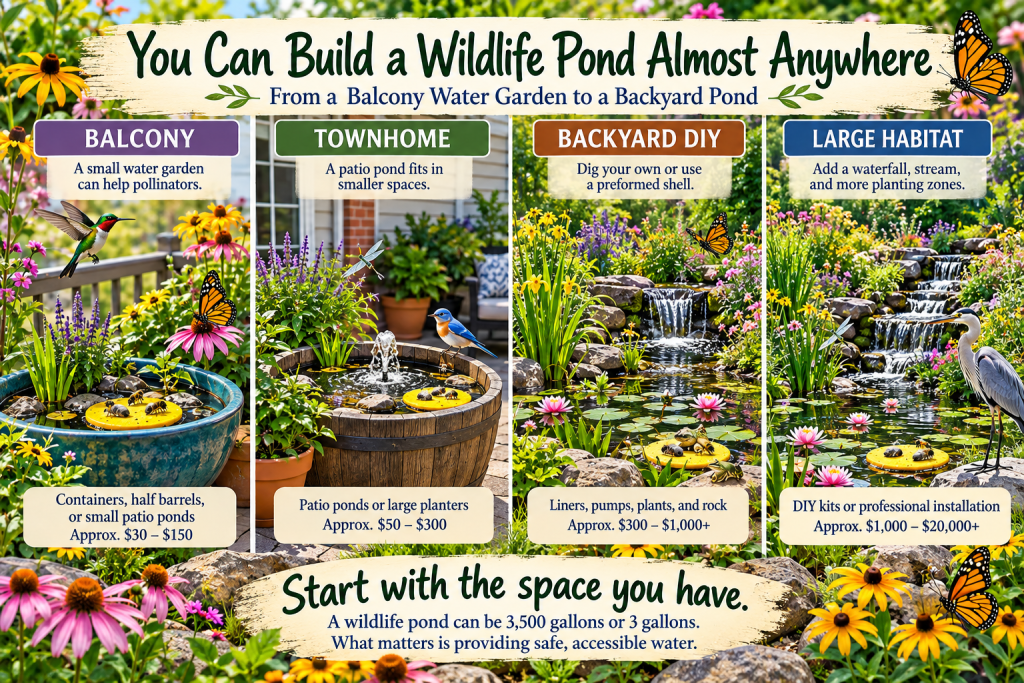
This is an inexpensive way to get started. Depending on the container and plants you choose, a simple mini pond might cost roughly $30 to $150.
And don’t assume small means unimportant.
To a thirsty bee, your little pond may be the most important water source in the neighborhood.
Apartment or Balcony? You Can Still Help
A balcony water garden can provide valuable water for visiting pollinators.
Choose a sturdy, watertight container and keep the water relatively shallow. Add stones that rise above the waterline so insects have safe places to land.
A few container-grown native flowers nearby can turn that tiny space into a pollinator rest stop.
There is one important consideration with balconies: water is extremely heavy. A gallon weighs a little over eight pounds. Even a relatively small container can become surprisingly heavy once you add water, rocks, and plants.
Keep balcony water features small, and check building or HOA rules and weight restrictions before installing one.
Have a Yard? Try a Small In-Ground Pond
If you have a single-family home or townhouse with a little ground available, you can go one step further.
A small preformed pond shell is one option. Another is digging your own shape and installing a pond underlayment and flexible liner.
You can create different depths, including a shallow wildlife-access area around part of the perimeter. Add rocks, native plants, and perhaps a small pump or fountain to provide circulation.
A modest DIY backyard pond can often be created for a few hundred dollars, although pumps, quality liners, filters, stone, electrical work, plants, and landscaping can quickly increase the total.
This is one project where I would rather see someone build a smaller pond correctly than build a large one using the cheapest liner and equipment available.
Want a Larger Pond?
This is where the possibilities really open up.
A larger pond can incorporate a waterfall or stream, filtration, different planting zones, large stones, aquatic plants, and surrounding native habitat.
You can still build it yourself.
There are pond kits available that include appropriately sized liners, pumps, filters, tubing, and other components. Doing the labor yourself can save a considerable amount of money.
Depending on size and equipment, a substantial DIY pond can easily move into the $1,000 to several-thousand-dollar range.
Before digging, always have underground utilities marked. Also check local requirements and HOA rules that could apply to ponds, electrical installations, fencing, or water depth.
Or Hire a Professional
There is nothing wrong with deciding that you want the pond but don’t want the project.
Professional pond installers can handle excavation, liner installation, pumps, filtration, waterfalls, stonework, electrical requirements, and landscaping.
A professionally installed ecosystem pond can cost several thousand dollars for a relatively modest project and $10,000, $20,000 or considerably more as size, excavation, stone, waterfalls, filtration, access difficulties, and landscaping increase.
That is a significant investment.
But you don’t need a professionally built pond to help wildlife.
A $50 mini pond can matter too.
Don’t Forget the Landing Zones
This may be one of the most important parts of a wildlife pond.
Don’t create beautiful water that tiny creatures cannot safely reach.
Use rocks, pebbles, shallow shelves, partially submerged branches where appropriate, aquatic plants, or specially designed pollinator watering surfaces.
Watch your pond after you build it.
Wildlife will often show you where the design works and where it needs improvement.
Keep the Water Moving When You Can
Moving water offers another benefit.
A small fountain, bubbler, solar fountain, or pump can help circulate the water. Birds are often attracted to the sight and sound of moving water, and circulation can help keep a small pond healthier.
You don’t necessarily need an elaborate waterfall.
For a small container pond, even a little solar-powered fountain may be enough to create movement.
For larger ponds, the pump and filtration system should be appropriately sized for the amount of water you’re circulating.
Skip the Chemicals
A wildlife pond is different from a swimming pool.
If birds are bathing in it, bees are drinking from it, frogs are living around it, and dragonflies are visiting it, think carefully about everything you add to the water.
At Whiskered Garden, I use filtration and other pond-management methods, including barley straw, rather than routinely relying on harsh chemical treatments.
The goal isn’t sterile water.
The goal is a healthy living water source.
Plant Around the Pond Too
The water itself is only part of the habitat.
Native plants surrounding a pond provide shelter, shade, nectar, pollen, seeds, and places for wildlife to hide.
They also help make the pond feel like part of the landscape rather than an isolated bowl of water.
Even with a tiny patio or balcony pond, you can place pollinator-friendly container plants nearby.
Think of the water and plants as working together.
Your DIY Pond Doesn’t Have to Look Like Mine
This might be my favorite part of the article.
You don’t need 1.5 acres. You don’t need a 3,500-gallon pond. And you certainly don’t need to duplicate someone else’s habitat.
Look at the space you have.
A balcony can hold a tiny pollinator water garden. A townhouse patio can accommodate a container pond. A suburban backyard can support a small in-ground pond. A larger property may have room for an entire pond ecosystem.
Start where you are.
Then watch what happens.
You may build it for the bees and discover birds bathing there. You may put it out for butterflies and find dragonflies. A frog may eventually appear that you certainly didn’t purchase or invite.
That’s the wonderful thing about creating habitat.
Provide what wildlife needs, and wildlife has a way of finding it.