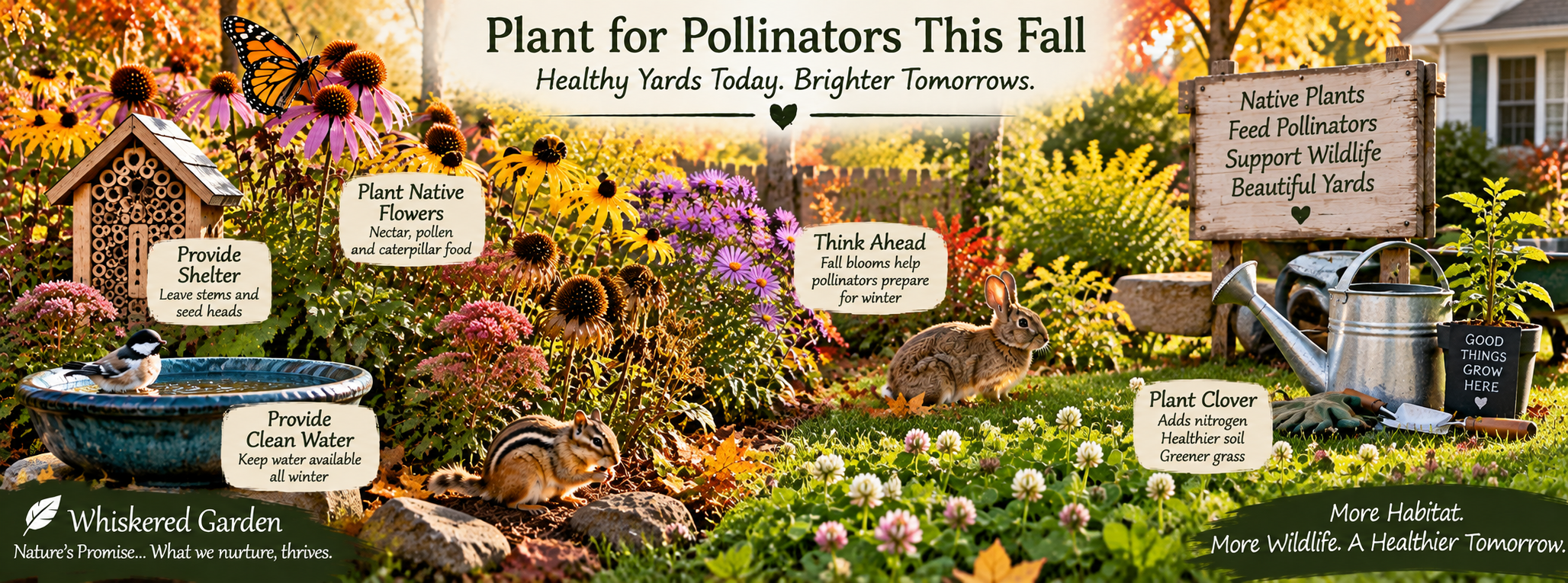
Plant the Right Flowers
Fall Is the Time to Prepare Your Yard for Pollinators, Winter, and Spring
By Cindy Bishop, Whiskered Garden
Fall may look like the end of the gardening season, but it is actually one of the best times to think about what your yard will provide next year.
The choices we make now can determine what happens when spring returns.
Bees will emerge looking for pollen and nectar. Butterflies will need flowers and host plants. Birds will search for insects to feed their young. Other wildlife will depend on the seeds, shelter, water, and natural spaces we leave behind.
Planting flowers is one of the easiest ways to help.
However, simply adding something colorful is not enough.
The right plants matter.
Why Native Plants Matter
Native plants developed relationships with local insects and wildlife over very long periods of time.
Their flowers can provide pollen and nectar for native pollinators. Leaves may become food for caterpillars, while seeds can feed birds later in the season. Stems and vegetation also create places where insects can shelter or spend part of their life cycle.
Those relationships are easy to overlook when we shop for plants based only on color or appearance.
A flower can look beautiful to us without providing much value to wildlife.
When native vegetation disappears and large areas are replaced with turf or plants that offer little food, the effects move through the entire habitat.
Fewer useful plants can mean fewer insects. That affects the birds and other animals that depend on those insects for food.
One plant connects to another life.
That is how a habitat works. Pretty Does Not Always Mean Useful
Garden centers are filled with beautiful plants, but appearance should not be the only reason we choose them.
Some highly modified flowers may be harder for pollinators to use. Changes in flower shape can make pollen or nectar difficult to reach. Certain varieties may also provide less of the food insects are seeking.
This does not mean every nonnative or cultivated plant must disappear from your garden.
Instead, begin looking at plants differently.
Ask what each one contributes.
Does it provide nectar? Can a caterpillar eat it? Will birds use its seeds? Does it bloom when other food is scarce?
A garden can be beautiful and useful. We should expect both.
Fall Is an Excellent Time to Plant
Cooler fall temperatures can make planting easier on both plants and gardeners.
The soil often remains warm after summer heat has faded. That gives many suitable perennials, shrubs, and trees an opportunity to begin establishing roots before winter.
Fall planting can also reduce the stress caused by extreme summer temperatures.
What you plant now may be ready to grow when warmer spring weather returns.
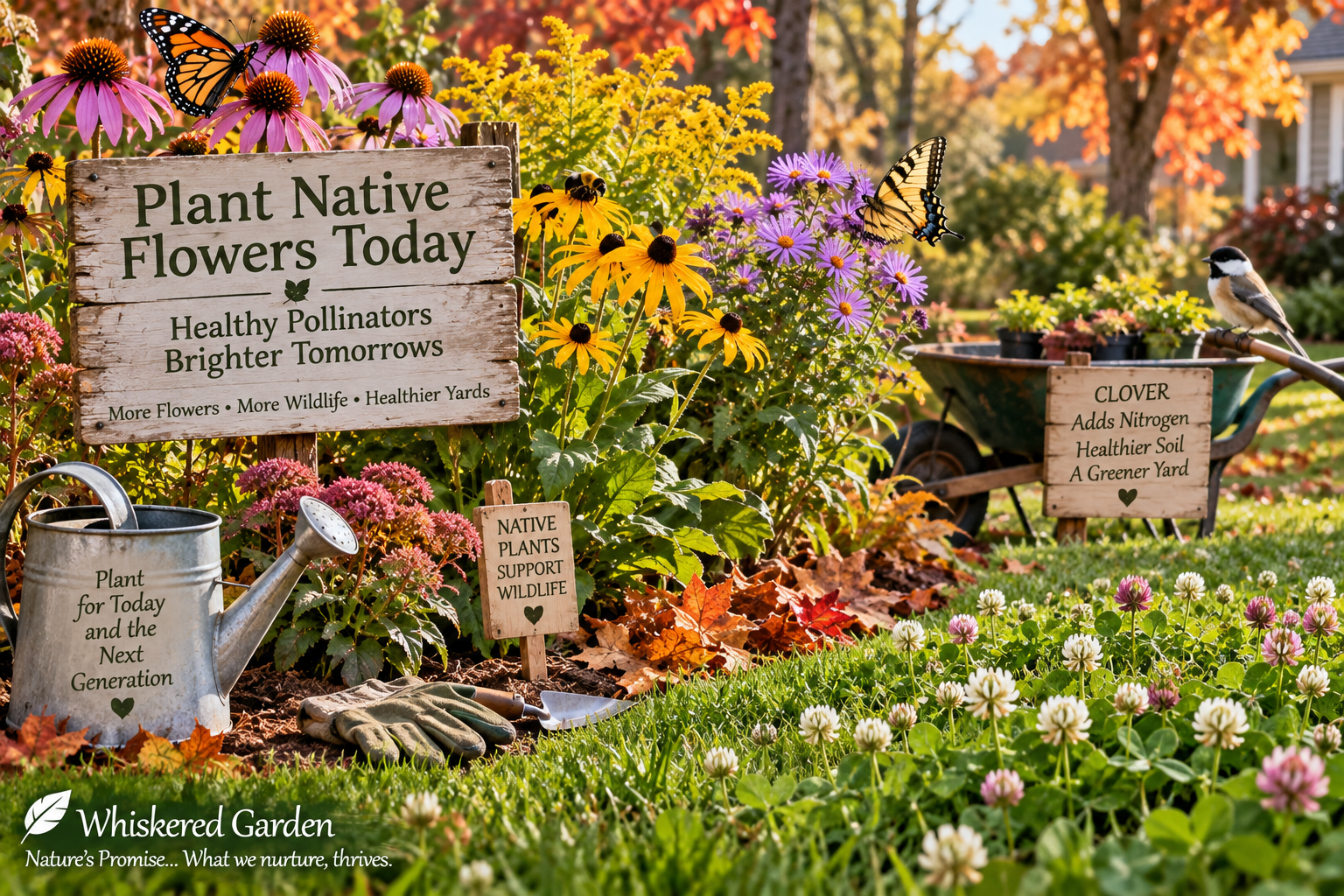
For a pollinator garden, consider native species appropriate for your particular region and growing conditions. Coneflowers, milkweeds, asters, goldenrods, and black-eyed Susan’s are familiar examples, although the best choices depend on where you live.
Do not choose a plant simply because the tag says “pollinator friendly.”
Find out what actually uses it.
Plan for Spring Before Spring Arrives
Spring pollinators need food as soon as they become active.
That means fall is a good time to look for gaps in your garden.
Do you have flowers that bloom early? What will provide food during summer? Which plants will continue blooming into fall?
A strong pollinator habitat provides different food sources throughout the growing season.
Early flowers help insects emerging after winter. Summer plants support the busiest part of the pollinator season. Late bloomers become especially important as other flowers disappear.
Fall flowers such as asters and goldenrods can provide valuable late season food.
Instead of designing a garden around one spectacular month, think about the entire year.
Do Not Cut Everything Down
Planting for pollinators also means knowing when to stop gardening.
Once flowers fade, resist the urge to remove every stem and seed head.
Some birds will eat seeds from spent flowers. Insects may use stems and other plant material for shelter. Fallen leaves can protect small creatures and help insulate the soil.
A completely cleared garden may look tidy, but much of its wildlife value has been removed.
At Whiskered Garden, I leave many plants standing through winter.
Spring cleanup can wait until nature has had enough time to wake up.
Fall Is Also a Good Time to Rethink the Lawn
Helping pollinators does not mean every blade of grass has to disappear.
My own property has very little traditional turf compared with the amount of habitat, native plants, clover, and natural areas. However, I still want the grass I keep to look healthy.
Clover is one of the tools I use.
Through its relationship with beneficial soil bacteria, clover can fix nitrogen from the atmosphere. That makes it useful in a mixed lawn and reduces the idea that a healthy green yard must depend on repeated applications of synthetic nitrogen fertilizer.
Fall can be a good time to establish clover in many areas because cooler temperatures and seasonal moisture can support germination. Local climate and the type of clover being planted still matter, so choose a variety suited to your region.
The result can be a lawn that supports more life while still looking cared for.
A Healthy Lawn Does Not Require a Chemical Routine
The small amount of grass I maintain is thick, green, and healthy, but I do not use pesticides or routine chemical lawn treatments.
My approach is simple. Clover is part of the lawn, and I use pelleted lime when soil conditions call for it. I also use Ironite as part of maintaining the turf I have chosen to keep.
The important lesson is not that every yard needs the exact same products.
It is that attractive landscaping and wildlife stewardship can exist together.
Before applying lime, check whether your soil actually needs it. Soil pH affects how plants use nutrients, so more is not automatically better.
Most importantly, avoid turning routine lawn care into routine pesticide use.
A green lawn should not come at the expense of the life around it.
Avoid Pesticides Around Pollinator Habitat
The right plant cannot protect a pollinator if the surrounding habitat exposes it to harmful insecticides.
Before buying a plant, ask whether it has been treated with systemic insecticides or other products that may affect insects.
The same caution applies once the plant reaches your yard.
A caterpillar eating a leaf is not necessarily a garden problem. It may be evidence that the plant is performing exactly the job you planted it to do.
Chewed leaves can become butterflies.
That changes the definition of a successful garden.
Choose Native Plants Carefully
Finding true native plants sometimes requires more effort than walking into the nearest garden center.
Native plant nurseries are a good place to begin. Local conservation organizations, native plant societies, and seasonal plant sales can also be useful sources.
Ask questions before buying.
Find out whether the plant is native to your region. Ask whether pesticides were used during production. Learn which insects use the plant and whether it serves as a host plant, nectar source, or both.
The more we know before planting, the more useful our gardens become.
Start With One Area
You do not need to redesign an entire property this fall. Choose one place to begin. Convert a small section of turf into a planting bed. Add native flowers to an existing garden. Put a few useful plants in containers if you have a patio or balcony.
You can also leave a patch of leaves beneath shrubs or allow some seed heads to remain standing through winter.
Next year, add something else.
A Habitat grows one decision at a time.
Plant This Fall for the Life You Want to See Next Spring. A fall garden is not finished. It is preparing.
Roots are becoming established beneath the soil. Seeds are waiting. Insects are finding protected places to spend the colder months. Birds are searching for food that will remain available through winter.
Meanwhile, we have an opportunity to prepare for what comes next.
Plant something native. Add clover where it makes sense. Reduce a little more turf. Leave some leaves and standing stems. Avoid unnecessary chemicals.
Then give nature time to do its work.
When spring arrives, the reward will not simply be a prettier yard.
It may be the first bee visiting an early flower. A caterpillar feeding on its host plant. A butterfly laying eggs. A bird carrying insects back to its nest.
Those moments begin with decisions we make now.
At Whiskered Garden, we believe ordinary yards can become an extraordinary habitat.
Plant this fall for the life you want to welcome next spring.
❤️ From Whiskered Garden
Nature’s Promise… What we nurture, thrives.
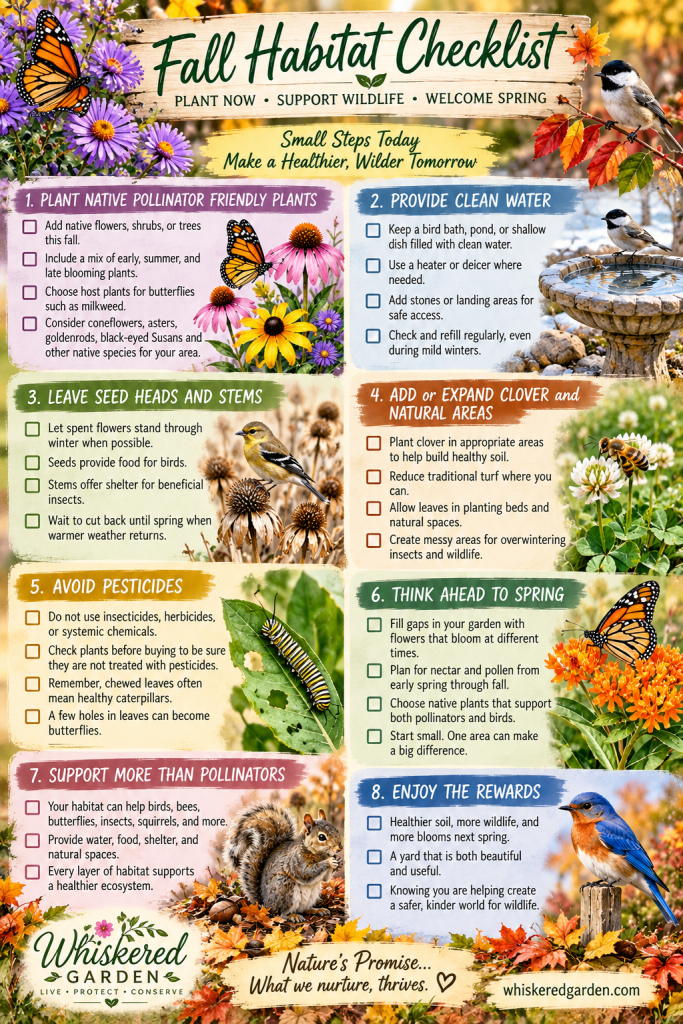
Below, is a helpful fall checklist to help guide you…